For several years now, Tadoussac Bird Observatory has been offering evening programs to attend our Nocturnal owl monitoring program.
Visit “An enchanted night with owls” section for more information.
Since 1996, this program monitors Boreal and Northern Saw-whet Owl populations, the two smallest owl species occurring in Quebec. Tadoussac Bird Observatory (TBO) has significantly contributed to enhance knowledge on these little nocturnal owls by collecting data on their reproduction and migratory movements.
Located at our Dunes site, this project takes place annually from September 4 to October 31. Since 2024, we have also implemented a capture system for the Long-eared Owl, a species for which data is sorely lacking in the northeastern part of North America.
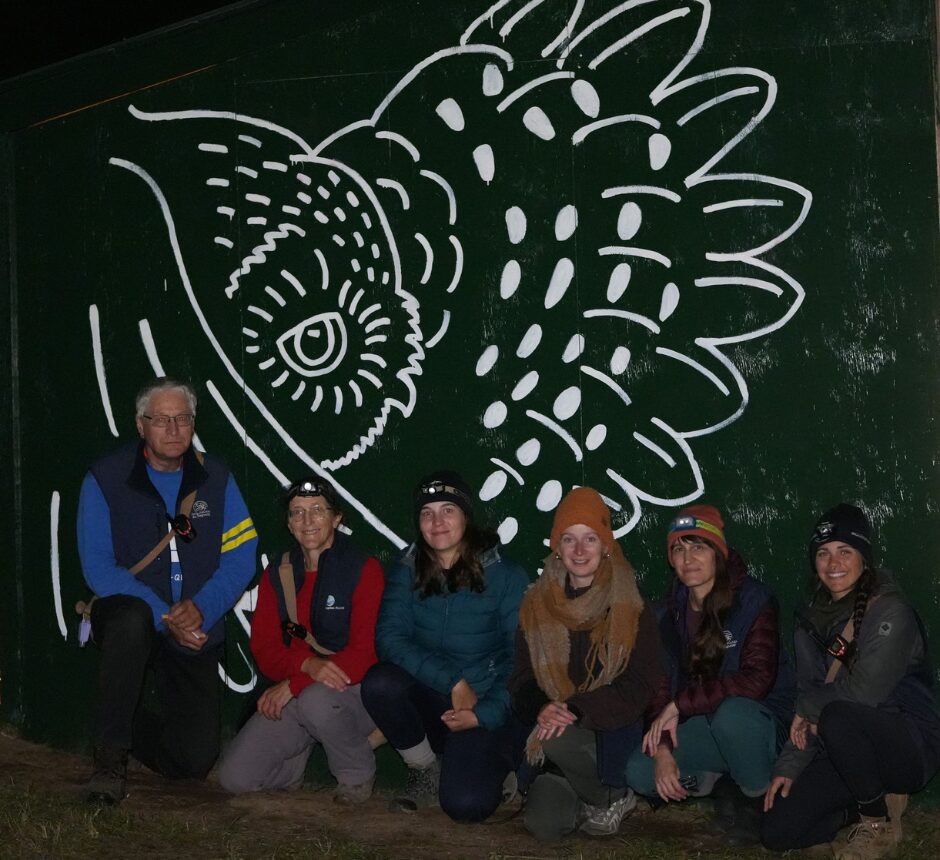
These nocturnal migratory birds are safely captured using carefully deployed mist nets at sunset. These nets are combined with call systems that replicate the specific songs of each species.
The captured birds are then gently extracted by a team of trained volunteers, under the guidance of a professional bander. In a mobile laboratory, various procedures are carried out, including the placement of aluminum rings and the determination of the birds’ sex and age.
You can observe this program in real-time from early September to mid-October during the interpretation evenings.
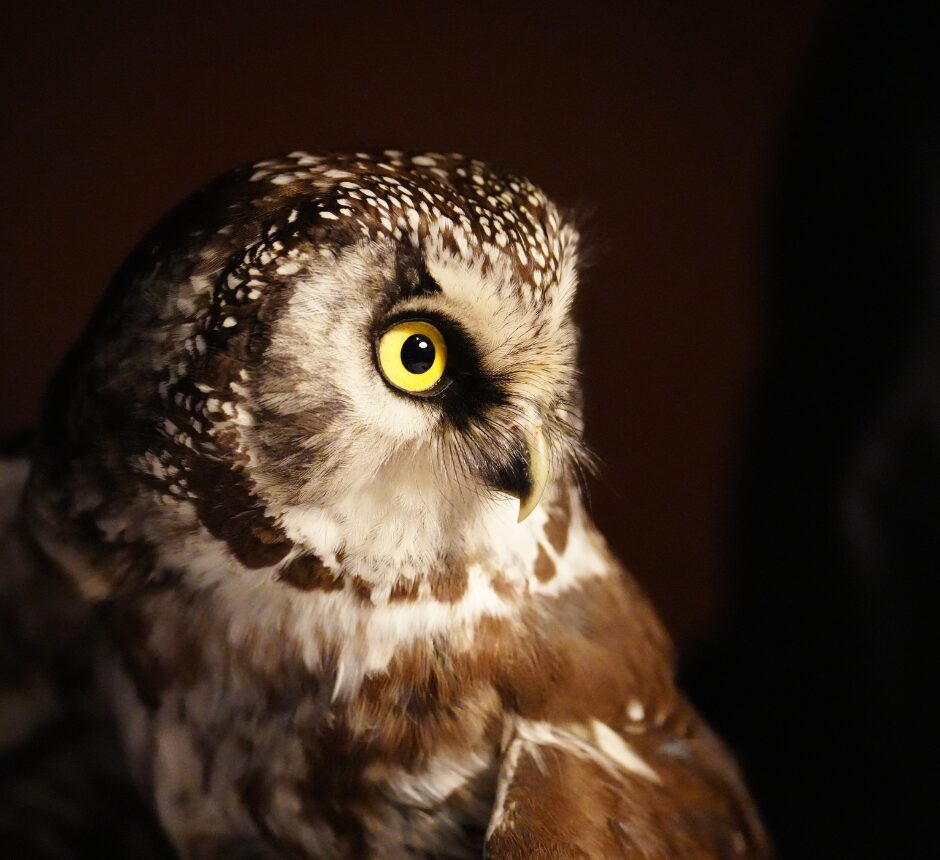
On a North American perspective, this project is crucially important as TBO is located within the dispersion and wintering range for the Boreal owl, a species only rarely observed and for which little is known. This owl usually spends most of the year in the boreal forest and make irruptive*, cyclic movements, linked to yearly variation in food abundance.
TBO is also the northernmost monitoring station in eastern North America for the Northern Saw-whet Owl, which allows to assess population trends closer to its breeding range.
*An irruption is a sudden change of a species’ population density, usually in response to varying food availability.
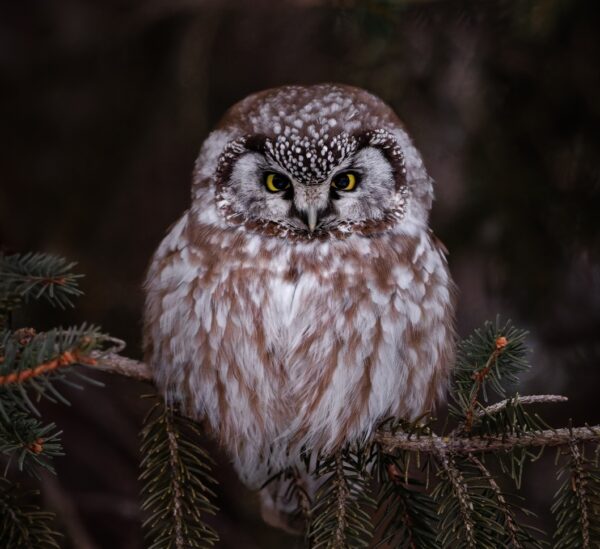
Only a handful of banding stations monitor Boreal Owl’s population trends. Indeed, TBO was the one to confirm the existence of irruptive cyclic fluctuations in abundance in North America, by highlighting the correlation between numbers recorded during migration and the abundance of Gapper’s red-backed voles, its main prey.
Since 1996, this cycle had been constant, with observable peaks every four or so years. However, since 2012, the strength of the peak has decreased, and the last anticipated peak did not occurred at all. At this moment, TBO is working with colleagues to evaluate if the Boreal Owl’s conservation is at risk.
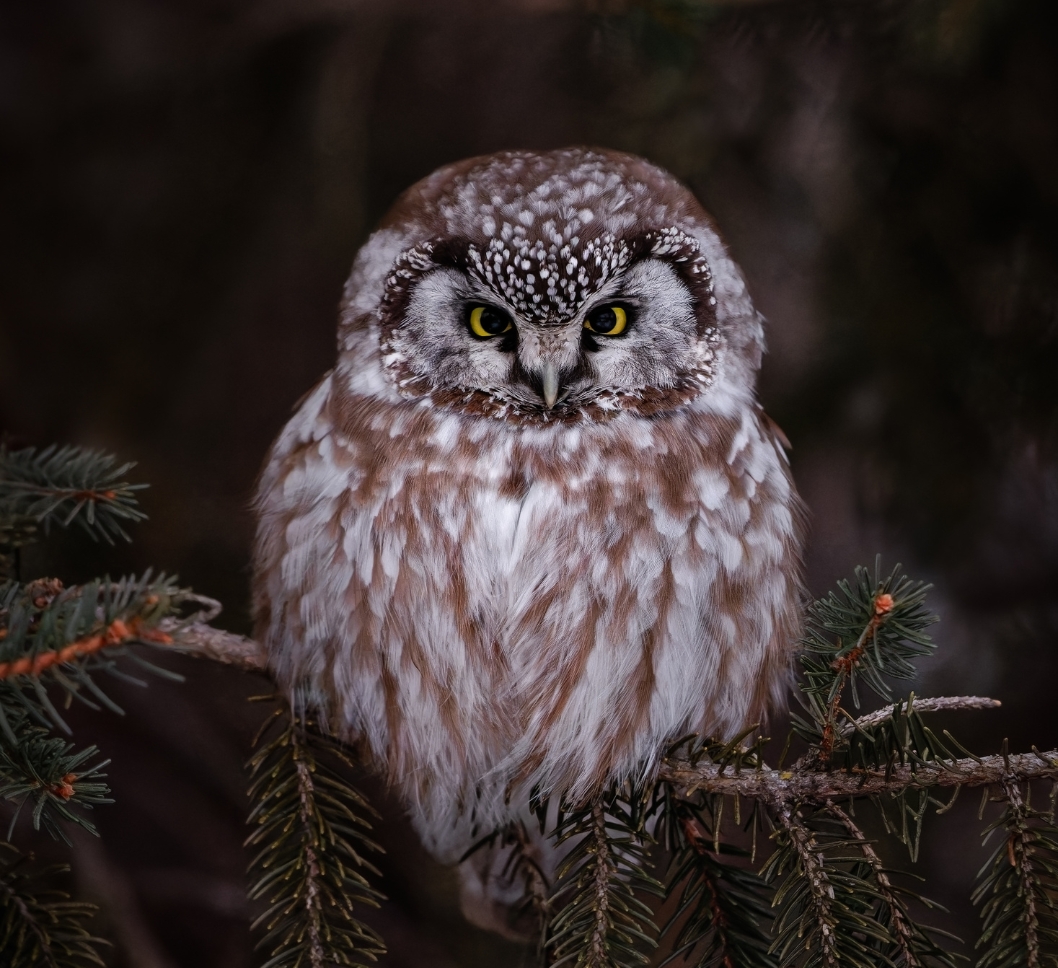
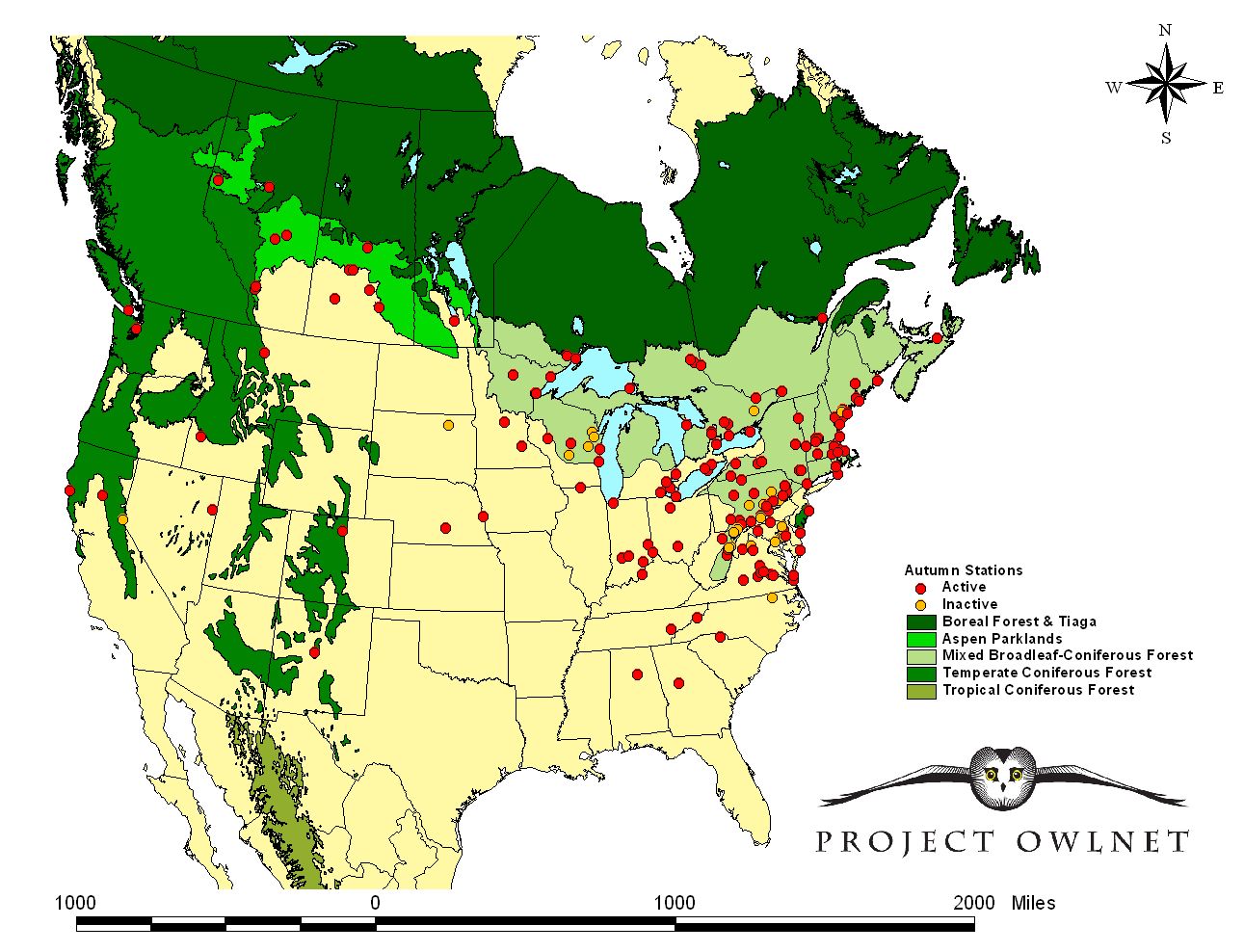
This research program on Boreal and Northern Saw-whet Owls collects important data to understand and track the population status for these species in northeastern North America, for which little is known. Specifically, TBO measures the abundance of individuals, the proportion of juveniles in the population, sex ratios as well as individual body condition annually.
Moreover, thanks to a extended network of Northern Saw-whet and Boreal Owl banding stations (Project Owlnet: Migrant owl research network) across North America, our knowledge of migration patterns of the Northern Saw-whet Owl had considerably increased over the last years. TBO also provided a significant contribution by documenting these movements from eastern Quebec with recapture data for nearly 200 birds since 1996.
Banding is a vital tool to study bird movements, survival, and behavior. Since 1904, approximately 60 millions of migratory birds from hundreds of species have been banded in North America, and about 4 million bands have been recovered and reported.
Banding data are use in multiple ways: assessing population trends, movements, survival, migratory connectivity, habitat use, etc.

For several years now, Tadoussac Bird Observatory has been offering evening programs to attend our Nocturnal owl monitoring program.
Visit “An enchanted night with owls” section for more information.
Since its creation, the pursuit of various bird banding programs has been made possible thanks to the involvement of a large number of volunteers.