

By Alexandre Terrigeol
When we think of a cruise on the St. Lawrence River, whales are usually the first thing that comes to mind. Yet the St. Lawrence River and Estuary also offer exceptional conditions for birdwatching in Quebec, including outstanding opportunities to observe seabirds. From spring through fall, numerous bird species use these food-rich waters as an important migratory stopover, feeding area, or travel corridor.
A Unique Spring Spectacle
In spring, the St. Lawrence becomes an important migratory stopover for many seabird species. After spending the winter farther south, these birds head north toward their breeding grounds and take advantage of the estuary and Gulf of St. Lawrence’s nutrient-rich waters to replenish their energy reserves.
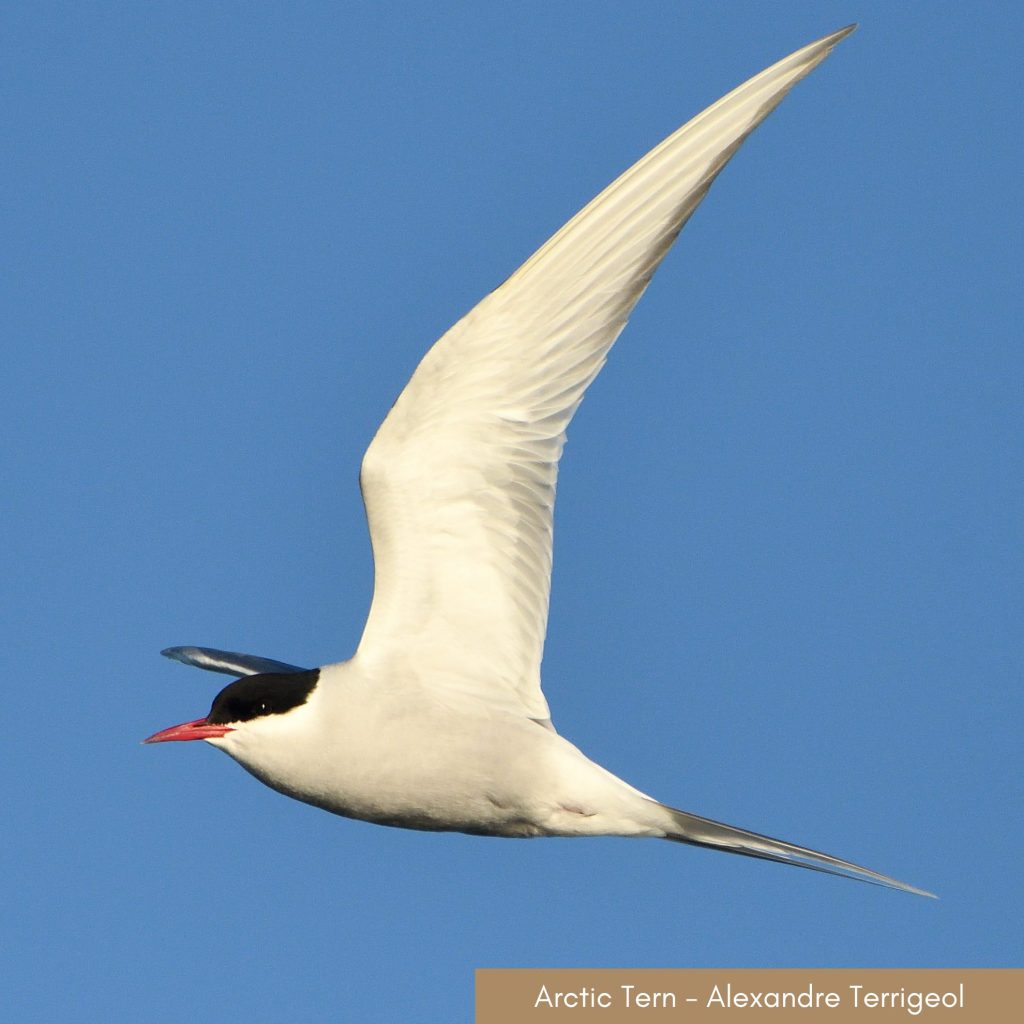
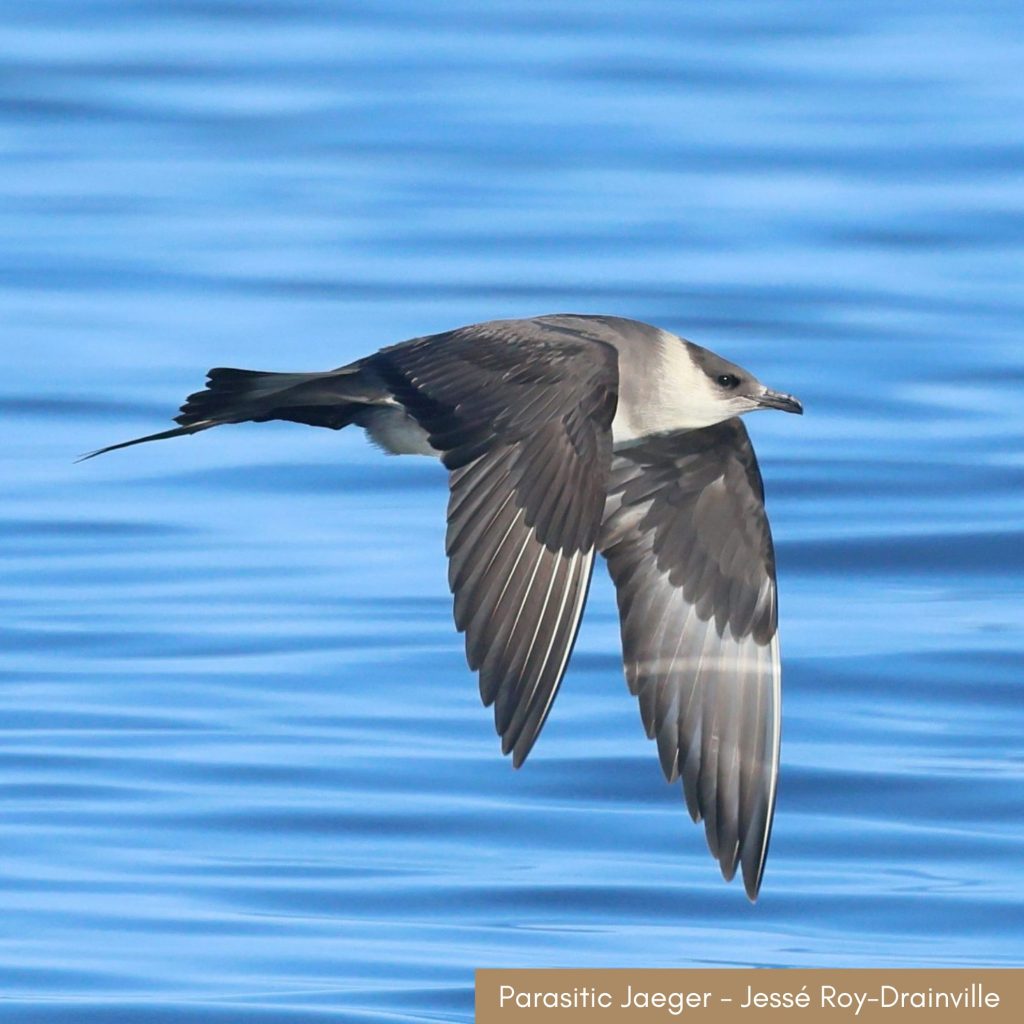
At this time of year, sea ducks such as Surf Scoters display their striking breeding plumage, while Razorbills and Common Murre prepare to nest on the islands of the river. But the real stars are often Arctic Terns, which can sometimes be seen by the hundreds after completing a spectacular journey of nearly 70,000 km since they were last observed. These terns also attract jaegers, the “pirates of the sea,” which pursue them in an attempt to steal their food, and sometimes force them to regurgitate it.
Depending on the season and weather conditions, several other pelagic bird species can also be observed. Experienced birding guides accompany participants throughout the cruise, helping identify the birds and providing fascinating insights into their behaviour and natural history.
Fall Migration: Heading South
In fall, the scenario unfolds in the opposite direction. Birds leave their breeding grounds and head toward their wintering areas, once again making the St. Lawrence a major migratory stopover. For many species, this is an essential stage before the long journey south.
Seabird cruises can bring participants closer to “current fronts,” areas that form at the surface of the ocean when two water masses with different temperatures, salinities, or flow speeds meet. These zones can concentrate nutrients and, in turn, provide abundant food for seabirds.
This is where you may have the chance to observe Red-necked Phalaropes or, more rarely, Red Phalaropes. These remarkable birds often swim in circles to bring plankton closer to the surface, making it easier to feed. Sabine’s Gulls, which have spent the breeding season in the Arctic, can also be seen, along with the more common Bonaparte’s Gulls and Black-legged Kittiwakes.
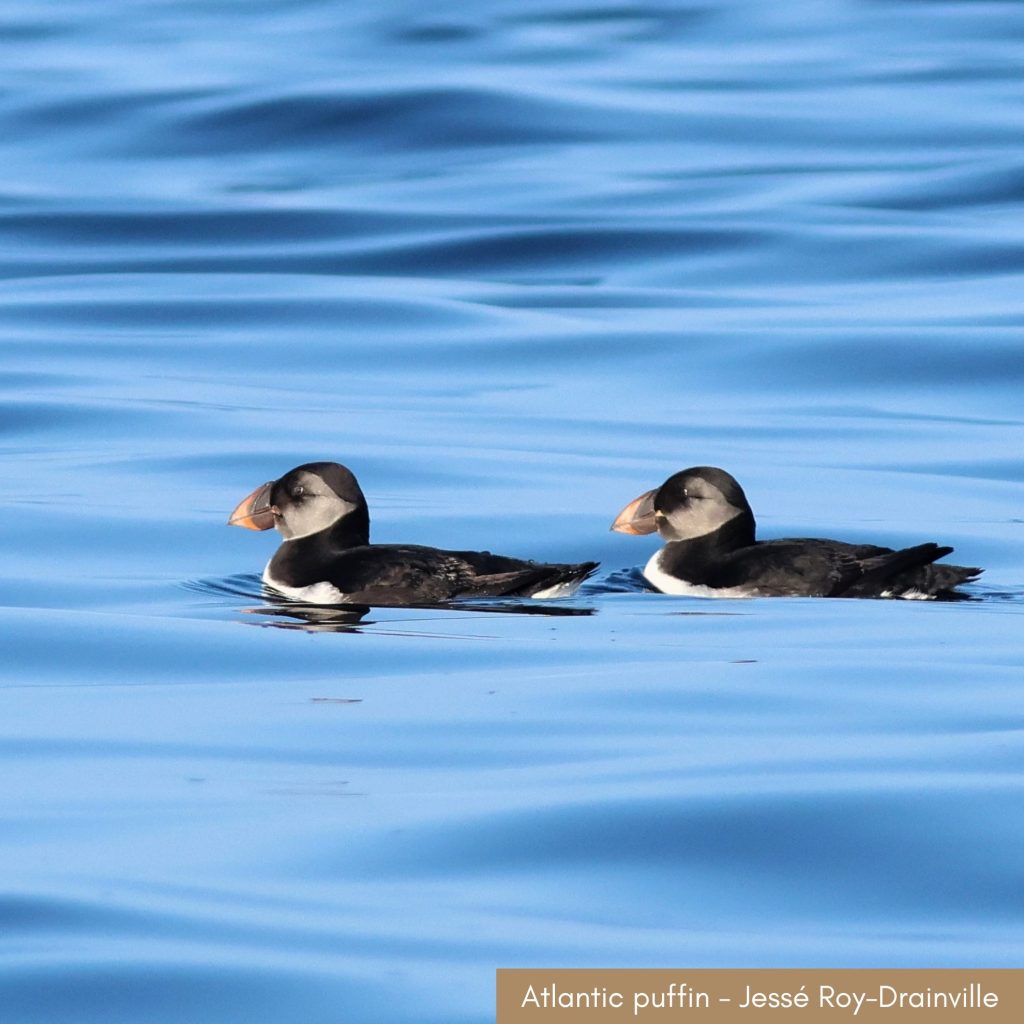
Atlantic Puffins may also be observed from mid-September onward as they stop to feed before continuing their migration along the eastern coast of the United States. Fall is therefore a particularly exciting time to observe seabird species that visit the St. Lawrence for only part of the year.
Why Go Seabird Watching on the St. Lawrence River?
Beyond the excitement of birdwatching, a seabird cruise offers a unique opportunity to better understand seabird ecology while experiencing these remarkable animals at close range.
Accompanied by experienced guides, participants can learn to identify different species, understand their behaviour, and discover the connections between seabirds and the St. Lawrence ecosystem.
For example, did you know that there are only slightly more than 300 seabird species worldwide, compared with nearly 11,000 bird species overall, even though oceans cover 71% of the Earth’s surface?
Field observations can also help document the presence and abundance of certain species. Unfortunately, our knowledge of seabirds remains limited, and observations made during these cruises can contribute to a better understanding of the species that depend on the St. Lawrence’s nutrient-rich waters. By sharing this knowledge, seabird cruises can play an important role in raising awareness about marine ecosystems and the conservation of the species that depend on them.
A Unique St. Lawrence River Experience
Ultimately, seabird cruises offer a direct connection with an exceptional natural environment. Watching a seabird feeding just a few metres away or discovering a species you have never seen before can create a powerful sense of wonder and a deeper connection with the St. Lawrence River.
These experiences are a reminder that the river is much more than a navigable waterway: it is a living ecosystem that is essential to countless species, many of which travel thousands of kilometres every year. By taking the time to observe and understand this remarkable environment, we can all gain a greater appreciation of why it is so important to protect the St. Lawrence River and its wildlife for generations to come.
This year, we are pleased to be partnering with Du Fleuve to offer seabird cruises in spring and fall, as well as with Croisières Neptune as part of the Côte-Nord Migratory Bird Festival.
Frequently Asked Questions About Seabird Cruises
- What is the best time of year to see seabirds?
It depends on the species you are hoping to see. From mid-May to mid-June, bird migration makes the area particularly spectacular for seabird watching. During the summer, activity can be quieter, except in areas near bird colonies. Seabird activity on the river picks up again in September and continues through the end of October.
- What birds can you see on a seabird cruise?
Depending on the season, it is possible to observe nearly 30 species of seabirds. Some of the most sought-after species include Atlantic Puffin, Razorbill, Common Murre, Red Phalarope, Red-necked Phalarope, Parasitic Jaeger, Long-tailed Jaeger, Pomarine Jaeger, Northern Gannet, Common Tern, Arctic Tern, Sabine’s Gull, Black-legged Kittiwake, Bonaparte’s Gull, Little Gull, as well as six other species of gulls.
- Can you see seabirds from Tadoussac?
Absolutely! Whale-watching cruises are also a good opportunity to observe seabirds. However, seabirds are generally not the main focus of these excursions, and guides may have more limited expertise regarding this particular group of birds. Some of these species can also be observed from shore, although a spotting scope is generally recommended.
- Do I need to be an expert birder to join a seabird cruise?
Not at all! Our guides are there to help you find and observe birds while sharing tips to help you learn how to identify them. Seabird cruises are therefore a great opportunity to discover new species, whether you are a beginner or an experienced birder.
- What is the difference between a whale-watching cruise and a seabird cruise?
Seabird cruises focus on areas that are particularly rich in birdlife, although marine mammals can also be observed along the way. While these areas are often similar to those visited on whale-watching cruises, they are generally located farther offshore and include areas where different water currents converge. These current fronts concentrate nutrients and food, attracting a remarkable diversity of seabirds.
- How can I book a cruise?
It’s easy! For spring and fall cruises, until October 4, visit www.dufleuve.com to book your spot.
For cruises taking place from September 21 to 27, 2026, you can reserve your place through the Zeffy platform: www.zeffy.com.